Technical SEO agency that fixes the cause, not the symptoms

We make sure search engines can crawl and index the pages you want found, and that visitors get a fast site. Based in Perth, working across WA and Australia.

We're a Perth-based technical SEO agency that traces problems to their root cause, fixes them in order of commercial impact, then re-crawls and checks Search Console to confirm each fix actually held. You get a site Google can crawl fully, only the pages you want indexed, and a dated record of every change.

Send your website address and what's going wrong. We look before we reply. Prefer to talk? Book a thirty minute call.

Crawl mapWhere Google spends its time
  • Pages you want found
  • Low-value URLs: filters, duplicates, parameters
Illustrative crawl map: one section generating low-value URLs that soak up crawl time.
  • Root-cause diagnosis
  • Implementation, not just reports
  • Every fix re-tested
  • Reporting from Search Console
  • WordPress, Shopify, WooCommerce and custom builds

Is technical SEO holding your website back?

These six symptoms usually point to a technical cause. Each one needs a different diagnosis.

  • Important pages aren't in Google.

    You've published them, but they don't appear in search, or Search Console reports them as "Discovered" or "Crawled, currently not indexed."

  • Traffic dropped after a change.

    A redesign, platform move, plugin update or developer release changed something search engines rely on.

  • Google is indexing the wrong pages.

    Filter URLs, tag archives, duplicates and old campaign pages show up in search, sometimes instead of the pages you sell from.

  • Your site is slow on mobile.

    Real visitors wait for pages to load or watch the layout jump around while they try to tap.

  • Your audit tool shows thousands of errors.

    You don't know which ones matter, and fixing them in order of the tool's list hasn't moved anything.

  • You're about to rebuild or migrate.

    Any URL that changes without a redirect plan risks losing the rankings it earned.

Find out which one applies to you

What technical SEO actually covers

Technical SEO improves a website's infrastructure so search engines can discover, render, understand and index its important pages, and so users get a fast, stable experience. It doesn't cover writing content or earning links, but neither of those works well on a site with technical problems.

We break it into four questions

  • 1 Crawl

    Can search engines find your pages?

    What we checkRobots.txt, internal links, sitemaps, status codes, crawl traps

  • 2 Render

    Can they see the content and links once the page loads?

    What we checkJavaScript rendering, raw vs rendered HTML, lazy-loaded content

  • 3 Index

    Should each page be stored, and is it?

    What we checkNoindex, canonicals, duplicates, thin pages, Search Console indexing reports

  • 4 Experience

    Can people use the page quickly on any device?

    What we checkCore Web Vitals, mobile usability, HTTPS, layout stability

One distinction trips up many sites. Crawlable doesn't mean indexable. Google can crawl a page and still decide not to index it, and a page blocked from crawling can occasionally still appear in results. Diagnosing which of the two is failing is usually the first job.

  1. DiscoveredNot linked or not in the sitemap
  2. CrawledBlocked by robots.txt or server errors
  3. RenderedContent or links only appear after JavaScript
  4. IndexedNoindex, duplicates or thin content
  5. Eligible to rankNow relevance and quality decide
Every page passes through five stages before it can rank, and each one can fail.

Why our technical SEO agency fixes causes, not warnings

Audit tools report symptoms. A single faulty template or misconfigured setting can generate thousands of warnings, and fixing them one by one wastes developer time while the cause keeps producing more.

That's the core of how we work

  1. Discover
  2. Diagnose
  3. Prioritise
  4. Fix
  5. Validate
  6. Monitor
Illustrative example, not a client
  • 4,800 duplicate title warnings
  • 4,800 canonical warnings
  • 2,000 thin-page warnings
One root causeA filter that creates a new indexable URL for every colour and size combination.
The fixOne crawl rule and one canonical change resolve most of the list. Rewriting 4,800 titles would have resolved none of it.
Three groups of warnings tracing back to one filter rule.

Start with a technical SEO audit

Every engagement starts with a full technical audit. It isn't a tool export. It's a findings document you could hand to any developer or agency.

AreaIncludes
CrawlingRobots.txt, crawl traps, parameter URLs, internal link discovery, orphan pages, broken links
IndexationNoindex tags, canonicals, status codes, soft 404s, duplicate and thin pages, Search Console indexing reports
ArchitecturePage depth, hierarchy, breadcrumbs, internal linking to commercial pages
URLs and redirectsRedirect chains and loops, HTTP to HTTPS, www and trailing-slash consistency
SitemapsAccuracy, canonical consistency, non-indexable URLs included by mistake
RenderingRaw vs rendered HTML, JavaScript links, client-side metadata
PerformanceCore Web Vitals field data, page weight, scripts, images, fonts, server response
MobileContent parity, viewport, tap targets, mobile performance
Structured dataValidity, eligibility, match with visible content
TemplatesOn-page elements generated at scale: titles, headings, meta descriptions
Specialist areas (where relevant)Faceted navigation, pagination, hreflang, migrations

What you receive: a prioritised issue list, the root cause behind each group of symptoms, the affected URLs, the recommended fix, and how we'll test it.

Request your technical SEO audit

Technical SEO services we provide

Each area below is part of the audit. The audit then decides which ones need work on your site.

Crawlability and indexability

We find out why important pages aren't indexed and why unwanted pages are. Typical causes are accidental noindex tags, conflicting canonicals, blocked resources, soft 404s and pages Google judges too similar to others. Not every URL should be indexed. Part of the job is deciding which ones shouldn't be, and removing them cleanly.

Site architecture and internal linking

We map how your pages connect and how many clicks each commercial page sits from the homepage. Then we restructure navigation, breadcrumbs and contextual links so ranking strength flows to the pages that make you money.

Service businessHome › Services › Service › Supporting content

StoreHome › Category › Subcategory › Product

Canonicals, redirects and URL structure

We resolve duplicate URL signals: HTTP vs HTTPS, www vs non-www, trailing slashes, parameters and product variants. Canonical tags are hints that Google may override, not commands, so the canonical has to agree with internal links, sitemaps and redirects.

We also collapse redirect chains and fix loops. We don't change good existing URLs just to make them "cleaner," because a URL change always carries risk.

Robots.txt and XML sitemaps

We check that robots.txt blocks only what it should, and never the CSS or JavaScript Google needs to render your pages. Robots.txt controls crawling. It isn't a reliable way to remove a page from Google's index; noindex or removal is.

Your XML sitemap should list only canonical, indexable URLs you actually want found. It shouldn't become a dump of every URL the CMS generates.

JavaScript SEO and rendering

JavaScript isn't the problem by itself. The real question is whether search engines can reliably discover, render and understand your important content and links.

We compare raw HTML with rendered HTML, and check client-side routing, lazy-loaded content, JavaScript-only links and dynamically set metadata. We then recommend server-side rendering, static generation or targeted fixes where they're needed. This matters most for sites built with JavaScript frameworks.

Core Web Vitals and site speed

Google's Core Web Vitals measure loading (Largest Contentful Paint, LCP), responsiveness (Interaction to Next Paint, INP) and visual stability (Cumulative Layout Shift, CLS). We diagnose the specific cause, whether that's oversized images, render-blocking scripts, third-party tags, font loading or slow server response, and fix it at template level.

Core Web Vitals help user experience and are part of how Google evaluates pages. They aren't a ranking switch. A fast page with weak content still won't rank.

Duplicate, faceted and parameter URLs

Filters, sorting and tracking parameters can create far more URLs than you have pages. Google's documentation on faceted navigation warns that crawlers can spend a large share of their visits on these URLs before working out they aren't useful, which slows the discovery of new content.

We decide which filter combinations match real searches and deserve an indexable page, and block or consolidate the rest.

Pagination

We make sure paginated categories and archives keep their deeper items discoverable through crawlable links, including on infinite scroll and "load more" designs. Google no longer uses rel="next" and rel="prev" as an indexing signal, so we don't sell it as a fix.

Structured data

We implement and validate schema that genuinely matches your content: Organization, LocalBusiness, Product, BreadcrumbList, Article and Service where they apply. Markup must reflect what's visible on the page. Schema makes a page eligible for rich results; it doesn't guarantee them.

Mobile and international technical SEO

Google primarily uses the mobile version of a page for indexing, so we check that mobile pages carry the same content, links and structured data as desktop.

For sites serving several countries or languages, we set up hreflang, URL structure and canonicals so each market sees the right version. See our international SEO service.

Ecommerce technical SEO

Stores multiply every technical problem by the size of the catalogue. Variants, filters, out-of-stock products, search result pages and cart or account URLs all need clear rules. Our ecommerce SEO service covers this in depth, with platform-specific work on Shopify and WordPress.

Website migrations

A migration is where technical SEO pays for itself or fails expensively.

  • Before launch: crawl the old site, benchmark traffic, and build a URL-by-URL redirect map.
  • On launch: check redirects, canonicals, robots rules, sitemaps and analytics.
  • After launch: re-crawl the site and watch indexation and traffic until they're stable.

Full detail is on our SEO migration page.

HTTPS and technical security signals

We check HTTPS coverage, mixed content, certificate issues and HTTP to HTTPS redirects. This is SEO hygiene, not a cybersecurity service.
How we prioritise: not every error deserves the same attention

A 5,000-line audit is only useful if it tells you what to fix first. We score each root cause on three factors.

ImpactHow much revenue-relevant visibility it affects ScaleHow many pages EffortHow hard the fix is
PriorityExampleAction
CriticalKey commercial pages blocked or noindexedFix immediately
HighSitewide canonical conflict, or filter URLs flooding the indexThis sprint
MediumRedirect chains, orphaned category pagesPlanned
LowMissing alt text on decorative images, minor metadata gapsWhen convenient

Quick, low-effort, high-impact fixes go first, so you see movement before the bigger structural work lands.

Developer-ready recommendations

If you have a developer, every recommendation arrives in a format they can act on without a meeting.

No "improve site speed" tickets. Each item names the template, the cause and the expected result. If you don't have a developer, we implement the fixes ourselves.

  1. 1Issue
  2. 2Affected URLs
  3. 3Evidence
  4. 4Impact
  5. 5Recommended fix
  6. 6Priority
  7. 7How we'll validate it

Our technical SEO process

A one-off project covers steps 1 to 5. A monthly retainer continues steps 5 and 6 and picks up new issues as your site changes.

  1. 1Discover
  2. 2Diagnose
  3. 3Prioritise
  4. 4Fix
  5. 5Validate
  6. 6Monitor
Technical SEO is a loop, not a one-off checklist.
  1. 1

    Discover

    We learn your business goals, platform, recent changes and known problems. You should see that we understand which pages actually make you money.

  2. 2

    Diagnose

    We run a full crawl, review Search Console and check rendering, then trace symptoms back to their causes. The output is the findings document.

  3. 3

    Prioritise

    We score each root cause on impact, scale and effort. You get a dated roadmap that names an owner (us or your developer) for each item.

  4. 4

    Fix

    We implement, or hand over developer-ready specifications. Every change goes into a dated change log.

  5. 5

    Validate

    We re-crawl, test the affected URLs and check Search Console reports. A fix isn't marked done until the evidence shows it worked.

  6. 6

    Monitor

    We watch indexation, crawl errors, Core Web Vitals and structured data monthly, so a new release doesn't quietly undo the work.

What reporting looks like

Reports come from Google Search Console and your analytics, not from a white-labelled dashboard score. Each monthly report covers:

Issues fixed
What shipped, when, and the validation result.
Issues remaining
In priority order, with an owner.
Indexation
Pages indexed vs pages you want indexed.
Performance
Core Web Vitals field data for key templates.
Search Console changes
New errors, coverage shifts, query and click trends.
Next month
The planned work and why it was chosen.

Tools we use

Tools gather evidence. Expertise decides what matters. Our standard stack includes:

  • Google Search Console
  • Google Analytics
  • PageSpeed Insights
  • Lighthouse
  • Chrome DevTools
  • Rich Results Test
  • Screaming Frog
  • Semrush
  • Ahrefs

Results

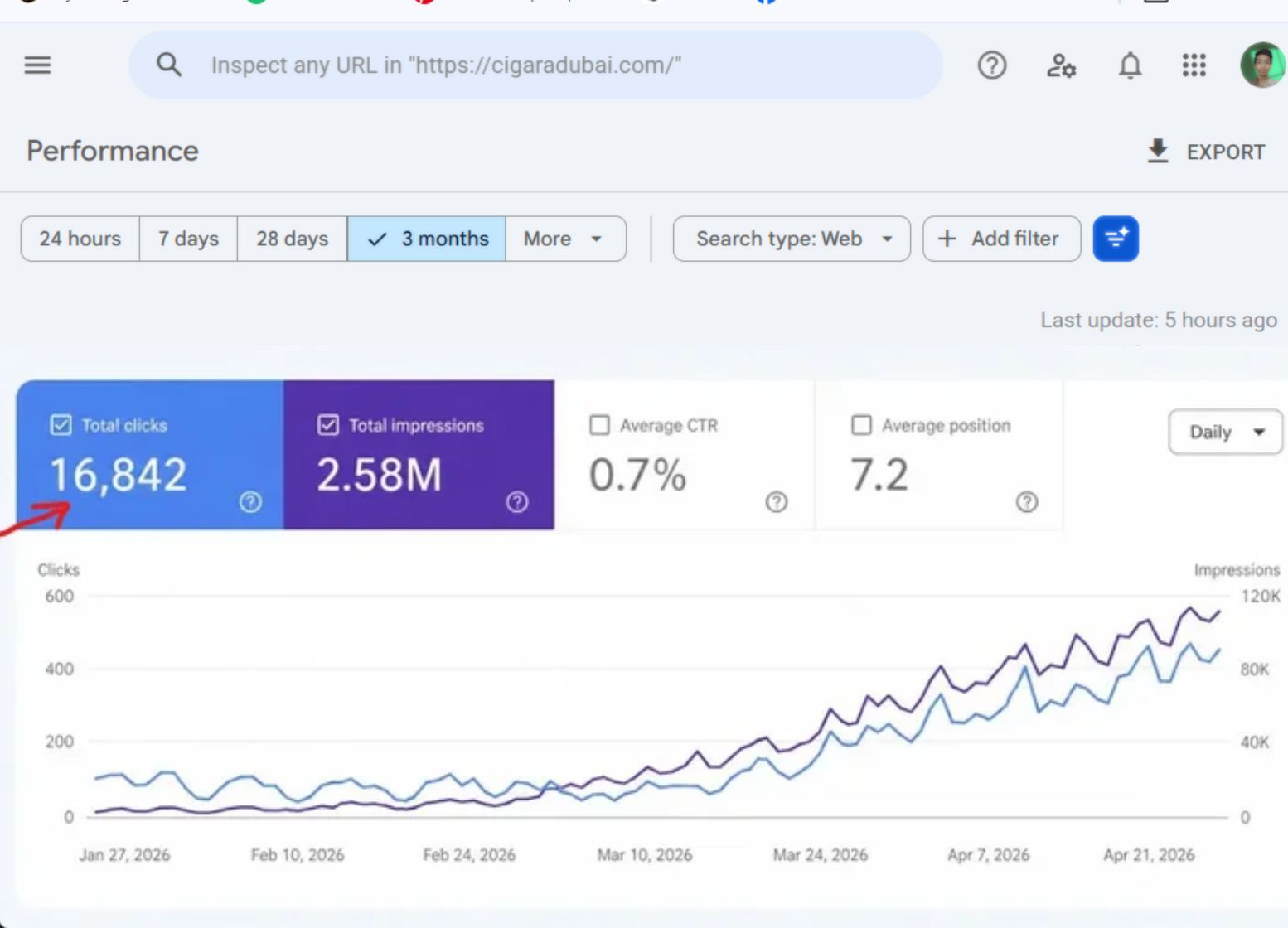
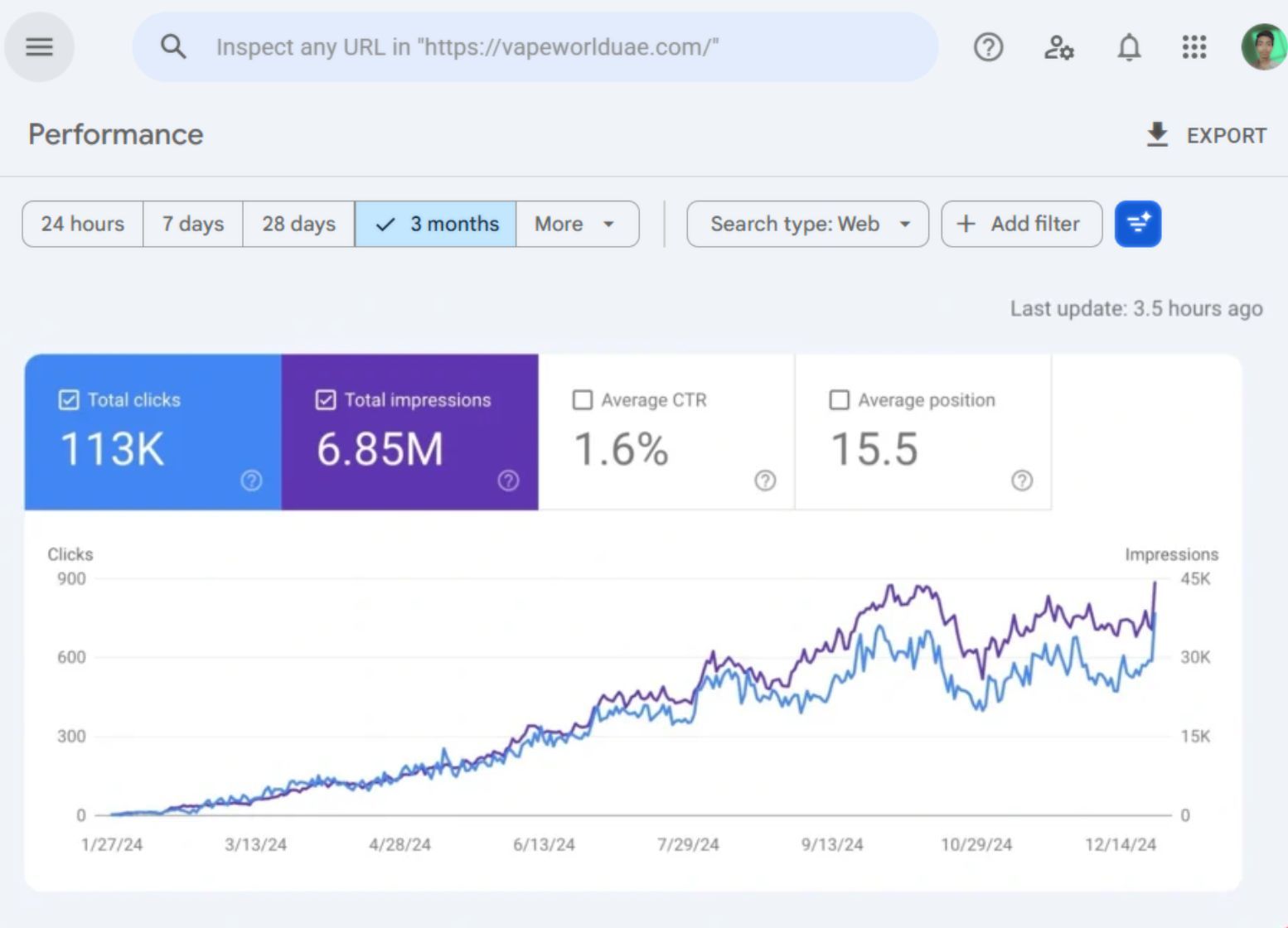
Both projects were delivered by the team behind SeoServicePerth.com, with figures taken from each client's Search Console. Technical work was one part of each engagement, alongside on-page and internal linking work, so the results reflect the combined effort.

Google Search Console performance report for cigaradubai.com showing 16,842 clicks and 2.58 million impressions over three months, with clicks and impressions both trending steeply upward
UAE WooCommerce store

We cleaned up technical issues, optimised product and category pages, and rebuilt internal linking. Search Console showed 16,842 clicks and 2.58 million impressions over a three-month view beginning 27 January 2026.

Google Search Console performance report for vapeworlduae.com showing 113 thousand clicks and 6.85 million impressions, rising from a flat baseline across the period shown
UAE Shopify catalogue

We rebuilt collection structure and product-page templates. Search Console showed 113K clicks and 6.85 million impressions for the period shown.

See the full case studies Results vary with industry, competition, site condition and campaign length. No one can guarantee rankings, including us.

Technical SEO in Perth, and beyond it

We're based in Perth and work with businesses across WA, Australia and internationally. Technical SEO doesn't depend on location the way local SEO does: a crawl problem is a crawl problem wherever your server sits.

Being Perth-based means calls and reviews run on Perth time, and we understand the WA businesses whose sites we work on. If you also need Google Maps visibility, technical work pairs with our local SEO service in Perth.

Who our technical SEO services suit

Engagement options and pricing

  • One-off

    Technical SEO audit

    Best forDiagnosis and a roadmap your developer can work from

    What's includedFull audit, root causes, prioritised roadmap, developer-ready specifications

  • Project

    Audit plus fixes

    Best forSites that need the problems found and fixed

    What's includedEverything in the audit, plus implementation, validation and a change log

  • Monthly

    Ongoing technical SEO

    Best forLarge, growing or frequently updated sites

    What's includedMonitoring, new-issue detection, release checks, fixes and monthly reporting

Price depends on site size, platform, how many issues there are, and how much we implement versus hand to your developer. You get a written quote after the audit, with the scope attached. See SEO packages and pricing.

How long does technical SEO take?

The audit comes first, and critical fixes can ship in the weeks after. Search Console often reflects fixes within weeks of Google recrawling the affected pages. Ranking and traffic changes take longer and depend on your competition.

Timing depends on site size, the number and severity of issues, your platform, and how quickly fixes can be deployed. Anyone promising rankings within 30 days is guessing.

Technical SEO FAQs

What does a technical SEO agency do?

A technical SEO agency finds and fixes the infrastructure problems that stop search engines crawling, rendering and indexing a website properly: crawl blocks, indexation errors, duplicate URLs, slow pages, broken redirects and rendering issues. A good one also prioritises fixes by business impact and confirms each one worked.

How do I know if my website has technical SEO problems?

Check Google Search Console's Pages report for important URLs that aren't indexed, and compare the number of indexed pages with the number you expect. Other signs are sudden traffic drops after a site change, slow mobile pages, and filter or duplicate URLs appearing in Google.

Can technical SEO improve my Google rankings?

It removes the barriers that stop good pages from ranking. If those barriers were the problem, rankings often improve once they're fixed. Technical work alone won't make thin content or a weak offer rank.

Do you implement the fixes or just audit?

Both. We can implement fixes directly or provide developer-ready specifications, and we validate the result either way.

Can you fix Google Search Console indexing issues?

Yes. We diagnose why pages fall into statuses such as "Crawled, currently not indexed" or "Duplicate without user-selected canonical," fix the cause, and track the pages through validation.

Do you work with WordPress, Shopify and WooCommerce?

Yes, along with custom and JavaScript-built sites. Each platform has its own limits on URLs, canonicals and generated pages, and we work within them.

Can you help with a website migration?

Yes. Migration SEO covers redirect mapping before launch, checks on launch day, and monitoring until traffic and indexation stabilise.

Do you offer one-off technical SEO audits?

Yes. The audit is a standalone project with a defined scope, and the findings are yours to use with any developer or agency.

How much does technical SEO cost in Perth?

It depends on site size, complexity and how much implementation you need. You get a written, scoped quote after the audit, and our packages are listed on the pricing page.

Are you a technical SEO agency based in Perth?

Yes. We're based in Perth, Western Australia, and work with clients across Australia and internationally.

Find the technical issues holding your site back, and what to fix first

Send your website address and a sentence about what's going wrong. We look at the site before we reply, and tell you plainly whether the problem is technical, and what fixing it would involve.

Use the contact form · Book a thirty minute call

You'll get back

  • Whether Google can crawl and index your key pages
  • The likely root cause behind the biggest problem
  • A short list of what we'd fix first

Want to know what is holding your site back?

Send your website address and we will reply with a written list of what we would fix first. If search is not the right investment for your business, we will say so.

Free · No obligation · No lock-in contract

By sending this you agree to be contacted about your enquiry. We use your details for that and nothing else, as set out in our privacy policy.

How would you like to start?

All four reach the same person. Email is quickest for us to act on; pick whichever you would actually use.