Ecommerce SEO agency for stores that need revenue, not just sessions

On a store, SEO has a revenue figure attached to it. That makes the work easier to judge and much harder to fake.

We're an ecommerce SEO agency based in Perth, working with Shopify, WooCommerce and WordPress stores across Australia and internationally. We decide which of your URLs Google should see, fix the category and product templates that carry buying searches, and report organic revenue alongside clicks.

cigaradubai.com WooCommerce · Search Console
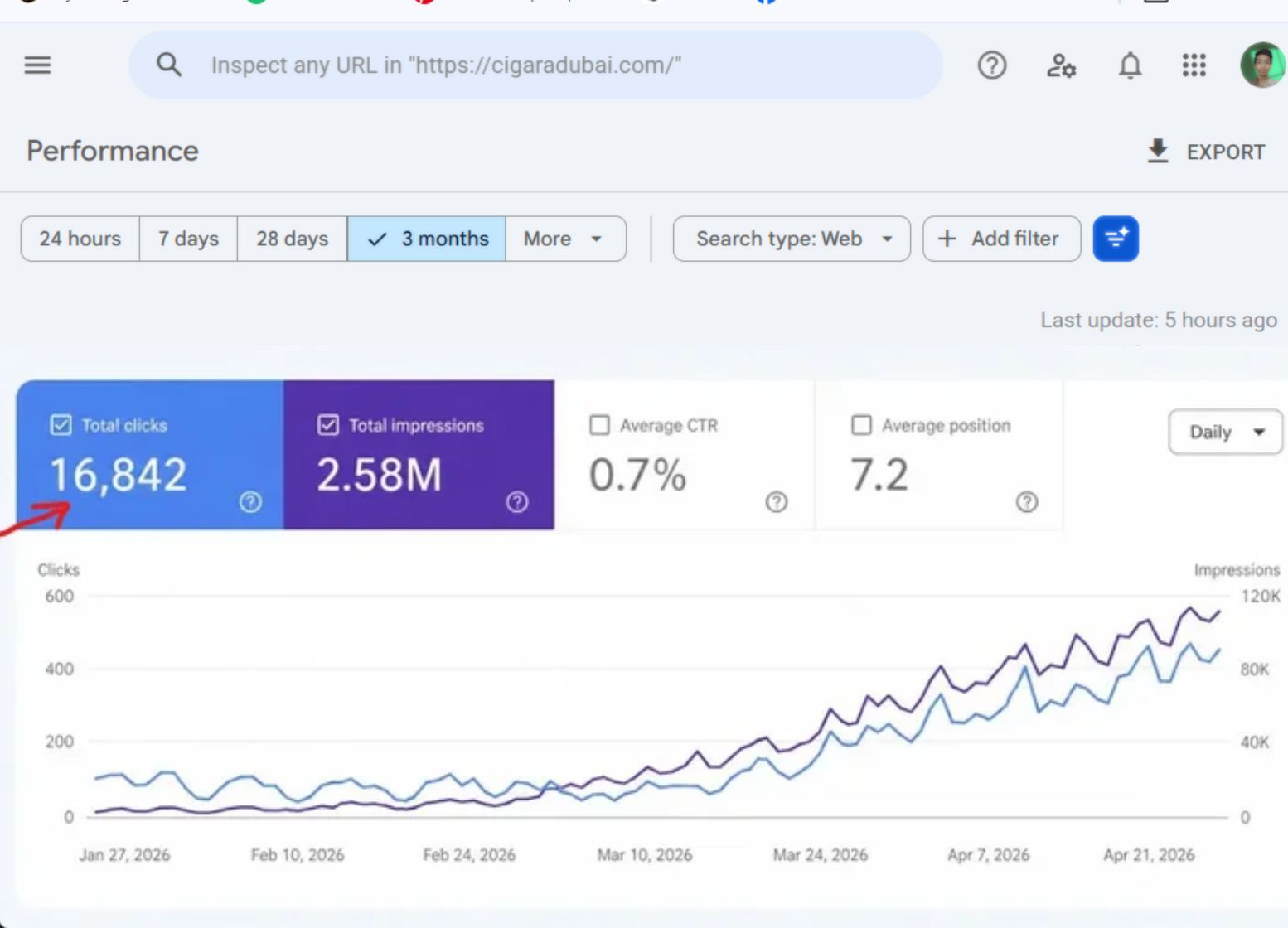
Google Search Console performance report for cigaradubai.com showing 16,842 clicks and 2.58 million impressions over three months, with clicks and impressions both trending steeply upward
Google Search Console, cigaradubai.com, 3-month view beginning 27 January 2026. Read the case study
  • 113K clicks for a Shopify store
  • 16,842 clicks in three months for a WooCommerce store
  • All figures from client Search Console

Why ecommerce SEO is different from normal SEO

An ecommerce site is the clearest case in search engine optimisation, because the outcome can be counted. A category page either earns revenue or it doesn't, and no amount of reporting can disguise which.

It's also the hardest case technically. A catalogue of four thousand products generates tens of thousands of crawlable URLs through filters, sorts, variants and pagination. Left alone, Google spends its crawl time on near-duplicates and never gets to the pages that sell.

So ecommerce SEO is really two jobs stacked

  1. 1Control what exists and what Google is allowed to see.
  2. 2Make the pages that remain the best answer for a buying search.

Most stores we look at have never had the first job done at all.

One category/hiking-boots/
  • ×8Colour
  • ×10Size
  • ×12Brand
  • ×4Sort order
  • ×6Pages
23,040 crawlable URLs, almost all near-duplicates
Illustrative: one category multiplied by colour, size, brand and sort filters plus pagination. Most of these should never be indexed.
Service-business SEOEcommerce SEO
Important pages20 to 50, reviewable by hand
Main commercial pageService page
Biggest technical riskThin or missing pages
Unit of workOne page
Measured byEnquiries

Is your online store hard to find in Google?

What store owners notice first, and what usually sits behind it.

What you noticeWhat's usually behind it
Category pages rank below competitors with fewer productsThin category templates, or authority split across filter URLs
Search Console shows far more URLs than you have productsFilters, sorts and parameters left indexable
Product pages never appear for searchesManufacturer descriptions copied across dozens of other stores
Traffic grew but revenue didn'tRankings for informational searches, not buying ones
Rankings dropped after a theme change or platform moveChanged URLs or templates without a redirect plan
Discontinued products throw errorsNo rule for out-of-stock and retired products

Our ecommerce SEO services

  • Indexation control

    We decide which of the thousands of generated URLs should exist at all. Then we enforce that through canonical tags (which tell Google which version of a page is the main one), robots rules and internal linking, rather than hoping Google guesses correctly. On most stores this is unglamorous work, and it has the highest return.

  • Category page structure

    For most stores, categories are the commercial pages and products are the long tail. Category templates get attention first because that's where searches with buying intent land: the heading, the introductory copy, the subcategory links and the products shown first.

  • Product page templates

    Fixing a template fixes four thousand pages at once. Unique content at scale is a template problem, not a copywriting problem. That means structured attributes, specifications, FAQs and reviews built into the template, not rewritten by hand.

  • Faceted navigation

    Filters are the single largest source of crawl waste on ecommerce sites. Which filter combinations should be indexable is a decision, and most stores have never made it deliberately.

  • Site speed on templates

    We measure Core Web Vitals (Google's measures of loading speed, responsiveness and visual stability) on category and product templates, where the traffic actually is. Not on the homepage a report happened to test.

  • Search-informed merchandising

    We compare what people actually search for with how your catalogue is organised. The two differ more often than you'd expect, and the gap is revenue. Sometimes the fix is a new category; sometimes it's renaming one.

Also part of the work: product structured data, internal linking between categories and products, buying guides that support category pages, and earning links from relevant sites.

What an indexation plan looks like

An illustrative example, not a client: an outdoor gear store with 3,000 products.

Indexation plan · outdoor gear store Illustrative example
URL typeExampleDecisionWhy
Main category /hiking-boots/ Index Matches a high-volume buying search
Category + filter with real demand /hiking-boots/womens/ Index as its own page People search "womens hiking boots"
Category + filter without demand /hiking-boots/?colour=olive Canonical to the category No one searches it; it splits authority
Sort order /hiking-boots/?sort=price Canonical, and don't link to it Duplicate content in a different order
Internal search results /search?q=boots Noindex Endless, thin, uncontrollable
Product variant /boot-x?size=9 Canonical to the main product Same product, same page intent
Discontinued, no replacement /old-boot/ Keep with alternatives, or 410 if it has no links or traffic Not automatically redirected to the homepage
Discontinued, direct replacement /boot-v1/ 301 redirect to /boot-v2/ Passes signals to the closest match

The same logic runs through every store we work on. The exact decisions depend on your catalogue, your platform and the searches your buyers use.

Matching searches to the right page type

Ecommerce keyword research isn't about finding the biggest numbers. It's about sending each kind of search to the page type that can win it.

SearchIntentBest page
hiking bootsBrowse and compareCategory
womens waterproof hiking bootsNarrowed buyingSubcategory
[brand] [model] bootReady to buy one thingProduct
best hiking boots for beginnersResearchBuying guide linking to the category
[model A] vs [model B]ComparingComparison page linking to both products

Ecommerce SEO by platform

  • Shopify and Shopify Plus

    Shopify's SEO problems are consistent across every store on the platform, which makes them predictable to fix: duplicate collection-path product URLs, rigid URL structure, and variant handling.

  • WooCommerce and WordPress

    Full control, including full freedom to create problems. Most of the work is removing things rather than adding them: plugin bloat, tag archives, and attribute pages indexed by accident.

  • B2B and wholesale stores

    Hidden pricing, catalogues behind logins, and long buying cycles break most consumer ecommerce advice.

  • BigCommerce, Magento and headless

    The indexation and template principles are the same on every platform, including BigCommerce, Magento or Adobe Commerce, and custom or headless builds. The platform decides how they're implemented.

Changing platform? Plan the SEO before launch, not after traffic drops. SEO migration

Ecommerce SEO results from Search Console

Every figure comes from the client's own Search Console property. Results depend on the market, the catalogue, and how quickly changes are implemented.

Google Search Console performance report for cigaradubai.com showing 16,842 clicks and 2.58 million impressions over three months, with clicks and impressions both trending steeply upward
cigaradubai.com · WooCommerce · UAE
Starting point
A competitive retail niche with technical issues, under-optimised product and category pages, and internal links built around product names rather than customer searches.
Work
Technical clean-up, product and category optimisation, and internal linking rebuilt around search behaviour.
Result
16,842 clicks and 2.58M impressions in a three-month view beginning 27 January 2026, average position 7.2.
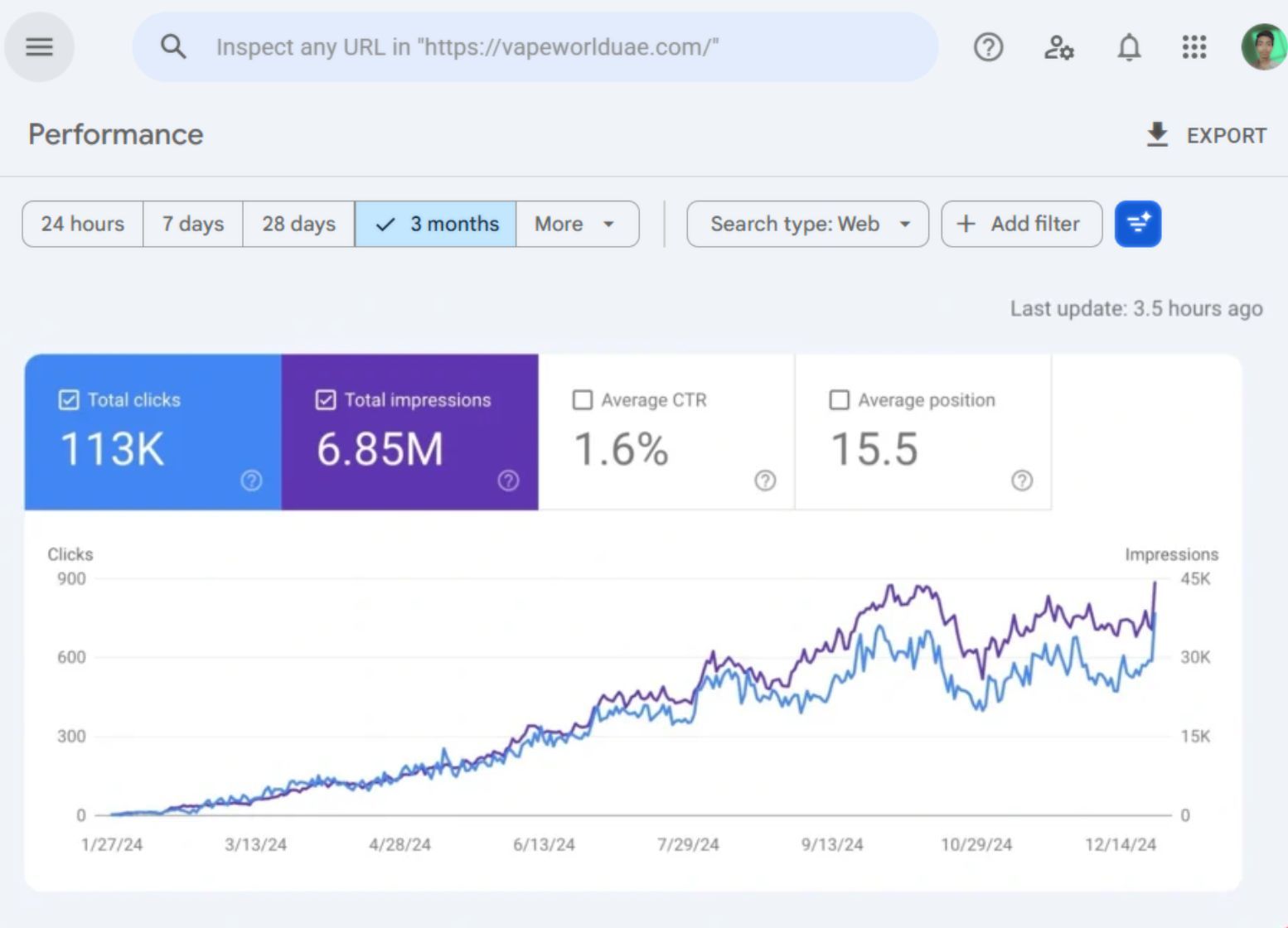
Google Search Console performance report for vapeworlduae.com showing 113 thousand clicks and 6.85 million impressions, rising from a flat baseline across the period shown
vapeworlduae.com · Shopify · UAE
Starting point
A large catalogue competing one page at a time.
Work
Collection structure, product templates and topical content rebuilt.
Result
113K clicks and 6.85M impressions for the period shown in Search Console.

See all ecommerce case studies

Who our ecommerce SEO services suit

How ecommerce SEO runs

  1. 1

    Crawl the whole store

    Every URL Google can reach, not a sample. The count alone is usually the first surprise.

  2. 2

    Decide what should exist

    The indexation plan, as in the example above.

  3. 3

    Fix templates

    Category first, then product, because that's the order revenue arrives in.

  4. 4

    Build on what works

    Once the foundations hold, content and authority for the categories that earn.

What to expect: indexation and template fixes often show in Search Console within weeks. Category rankings for competitive searches take months. Reporting covers organic clicks, category and product landing pages, add-to-carts, transactions and organic revenue, wherever your analytics tracks them.

How to choose an ecommerce SEO agency

There's no independent ranking of the best ecommerce SEO companies. Directory lists and "top 10" pages are mostly paid or self-published. These questions separate agencies faster.

Agency, consultant or specialist?

If your team can implement, an ecommerce SEO consultant arrangement gives you the specialist's decisions without the retainer. If not, we run the work ourselves.

  1. Can they show Search Console data for named stores, with date ranges?Testimonials claiming a multiple of revenue without a name or screenshot prove nothing.
  2. Ask how they'd handle your filter URLs.If the answer doesn't mention indexation decisions, they'll optimise pages Google shouldn't see.
  3. Do they work on templates or page by page?Page-by-page rewriting doesn't scale past a few hundred products.
  4. Will they report revenue, not just traffic?
  5. What happens to discontinued products?"Redirect to the homepage" is the wrong answer.
  6. Is there a lock-in contract?

Ecommerce SEO pricing

Ecommerce SEO is quoted per store, because the work depends on catalogue size, platform, how many URLs Google can currently reach, and how competitive your categories are. A 200-product Shopify store and a 20,000-product WooCommerce catalogue are different jobs.

You'll get a written quote after the free audit, with no setup fee and no lock-in.

Ecommerce SEO questions

How is ecommerce SEO different from normal SEO?

Scale and duplication. A brochure site has thirty pages you can review by hand. A store generates thousands automatically, most of which should never be indexed, and deciding which is a large part of the job.

Should I optimise category or product pages first?

Categories, in almost every case. They match how people search, they hold more internal authority, and one category template change affects a whole section of the catalogue.

Should every product page be indexed?

Every product people might buy, yes. Variants, sort orders and most filter combinations usually shouldn't be. Those get consolidated into the main product or category page.

How do you handle manufacturer descriptions?

On templates first: structured specifications, use cases, FAQs and reviews that differ from other stores selling the same product. Hand-written descriptions go to the products with the most search demand and margin.

Will SEO work if my store converts poorly?

It will make the problem more expensive. Doubling traffic to a store that converts at half a percent doubles the cost of a weakness you already have. Fixing conversion first is usually the better order.

Can you guarantee rankings or revenue?

No. Google controls rankings, and revenue also depends on price, stock and checkout. We commit to agreed work, a dated record of changes, and reporting from your own Search Console and analytics.

Do you work with stores outside Perth?

Yes. Ecommerce is the least location-dependent work we do, and most of our store clients aren't in Western Australia at all.

Find out how many URLs Google
is wasting time on

Send us your store address. The free ecommerce audit crawls the whole store and shows how many URLs exist versus how many should, which categories are under-built, and what we'd fix first. If SEO isn't the right investment for your store, we'll say so.

Want to know what is holding your site back?

Send your website address and we will reply with a written list of what we would fix first. If search is not the right investment for your business, we will say so.

Free · No obligation · No lock-in contract

By sending this you agree to be contacted about your enquiry. We use your details for that and nothing else, as set out in our privacy policy.

How would you like to start?

All four reach the same person. Email is quickest for us to act on; pick whichever you would actually use.