Shopify SEO agency that makes your Shopify collections rank

Shopify removes a lot of technical decisions, which is mostly good. The problems it creates are the same on every store, which makes them predictable to fix.

We're a Shopify SEO agency based in Perth, working with Shopify and Shopify Plus stores across Australia and internationally. We fix what the platform does by default, make changes in the theme so they apply to the whole catalogue, and then build the collection pages that win buying searches.

vapeworlduae.com Shopify · Search Console
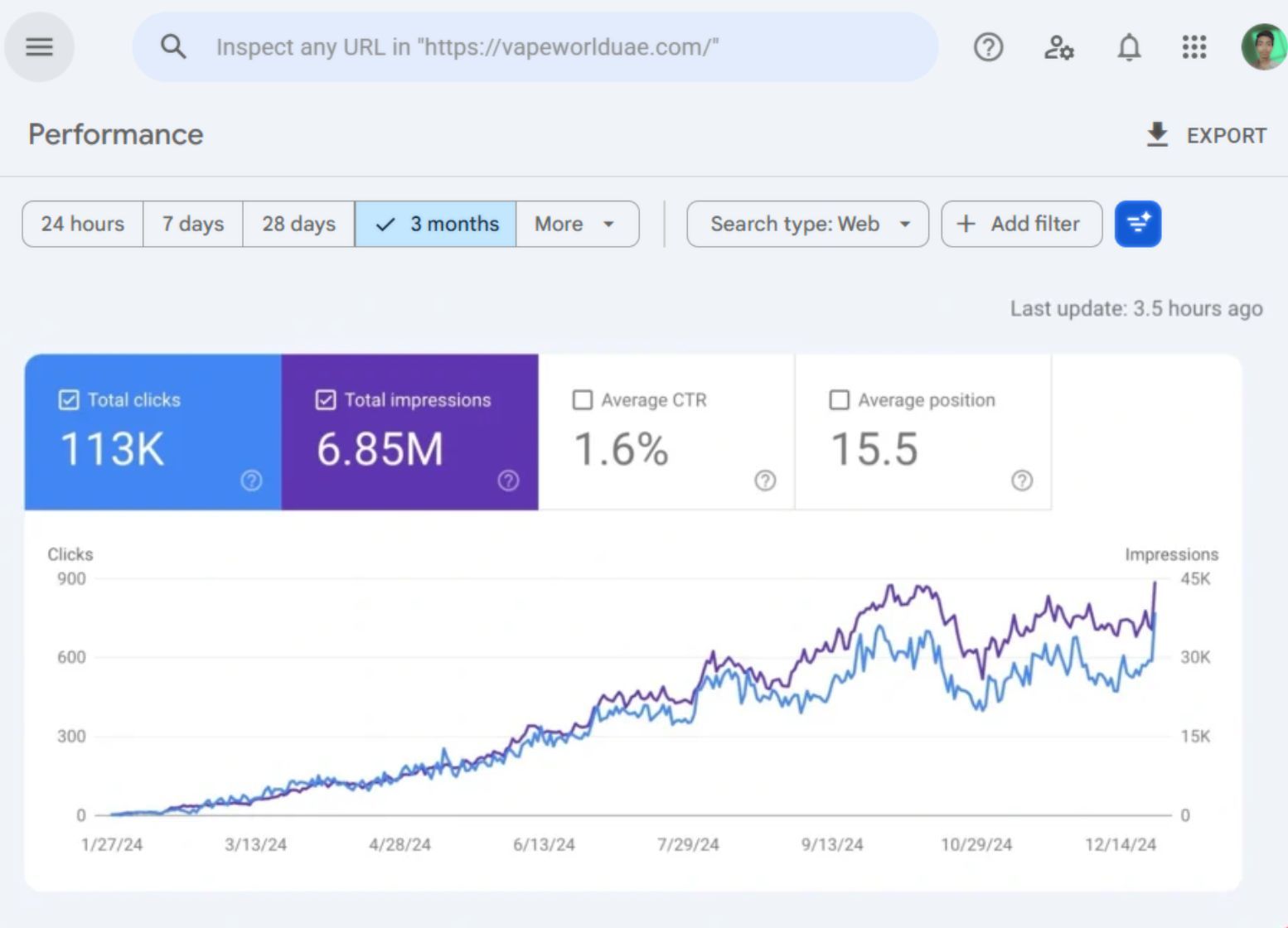
Google Search Console performance report for vapeworlduae.com showing 113 thousand clicks and 6.85 million impressions, rising from a flat baseline across the period shown
Google Search Console, vapeworlduae.com, totals for the period shown in the chart. Read the case study
  • 113K clicks and 6.85M impressions for a Shopify store
  • Figures from client Search Console

What is Shopify SEO?

Shopify SEO is the work of making a Shopify store's collections and products rank in Google. It means adjusting what the platform does by default: duplicate product paths, tag and filter URLs, theme templates and app scripts. Shopify handles the basics automatically, so the real work is in how those defaults interact with your particular catalogue.

So Shopify SEO isn't about installing an SEO app and editing a few meta titles. Most underperforming stores are held back by defaults nobody changed, not by the platform itself.

What Shopify does for youWhat it leaves to you
Canonical tags on products and collections
An automatic XML sitemap
A default robots.txt
Editable titles and meta descriptions
SSL and a fast hosting network

The Shopify URLs that cause most SEO problems

Every Shopify store produces the same set of URL patterns. Here's what each is, and what we usually do with it. The final call always depends on your store's search demand.

Shopify URL decisions Applies to every store
Shopify URL patternWhat it isUsual decision
/products/blue-runner The main product URL Index. This is the canonical.
/collections/shoes/products/blue-runner The same product reached via a collection Change theme links so they point to /products/ directly
/products/blue-runner?variant=4412… A variant selection Leave canonicalised to the main product
/collections/shoes/red A tag-filtered collection Usually keep out of the index, unless the tag matches real demand
/collections/shoes?filter.v.option.colour=red A Search & Discovery filter Keep out of the index; build a real collection if people search for it
/collections/shoes?sort_by=price-ascending A sort order Keep out of the index (Shopify's default rules already cover this)
/collections/all Every product in one list Usually keep out of the index
/collections/vendors?q=brand Automatic vendor pages Replace with proper brand collections if brand searches matter
/blogs/news/tagged/tips Blog tag archives Usually keep out of the index
The single most valuable fix on most stores

Many themes link to products through the collection path. Every internal link then points at a non-canonical URL. Changing one line of the theme so links point straight to /products/ stops that dilution across the whole catalogue.

  • /collections/shoes/products/blue-runner
  • /collections/sale/products/blue-runner
  • /products/blue-runner?variant=4412…
/products/blue-runnerone canonical URL
One product reachable through several URLs, consolidated to its canonical product URL.

Our Shopify SEO services

  • Collection architecture

    Which collections should exist, which should be indexable, and how they relate. This is the most valuable Shopify decision, and the one most often left on defaults. The most common problem we find is collections competing with each other and with product pages for the same search, while the owner has been told the problem is content volume.

  • The duplicate URL problem

    Shopify serves products at more than one path by default. Handling this properly prevents a whole class of ranking dilution: theme links fixed, collection paths consolidated, and sitemap and internal links consistent. Relying on canonical tags alone to absorb it isn't enough.

  • Theme-level template work

    Titles, headings, structured data and internal links set in the theme's Liquid templates (Shopify's template language), so they apply across the catalogue rather than product by product. That includes product structured data with price, availability and reviews, which makes products eligible for richer search results.

  • Tag and filter handling

    Shopify tag URLs multiply quickly and are rarely worth indexing. We decide deliberately which filters and tags stay out of Google, using robots.txt.liquid rules and noindex tags, and which deserve a proper collection instead.

  • App audit

    Most stores carry apps that inject scripts on every page and are no longer used. Older apps can also leave code in the theme after they're uninstalled. Cleaning this up is usually the fastest speed improvement available.

  • Speed within the platform's limits

    Theme weight, image handling and third-party scripts, measured on collection and product templates where the traffic is. We'll be straight about which speed problems Shopify simply won't let you solve.

What a collection page should do

An illustrative example, not a client: a Shopify store selling running gear.

Before · Shopify default
  • A "Running Shoes" collection with just a product grid and no introduction
  • "Mens running shoes" exists only as a tag URL, which Google indexes alongside 40 other tag combinations
  • Product links point through /collections/running-shoes/products/...
After
  • A short introduction answering what buyers need to choose, plus links to subcollections
  • "Men's running shoes" rebuilt as a real collection because people search for it; the other tag URLs removed from the index
  • Product links pointing to canonical /products/ URLs
  • Buying-guide content linking back to the collection

The collection becomes the page that ranks for "running shoes", instead of a grid competing with its own tag pages.

Shopify SEO results

Google Search Console performance report for vapeworlduae.com showing 113 thousand clicks and 6.85 million impressions, rising from a flat baseline across the period shown
vapeworlduae.com · Shopify · UAE
Starting point
A large catalogue competing one page at a time.
Work
Collection structure, product templates and topical content rebuilt.
Result
113K clicks and 6.85M impressions for the period shown in Search Console.

The figures come from the client's own Search Console property. The same platform patterns apply to every Shopify store.

Who our Shopify SEO services suit

How Shopify SEO runs

  1. 1

    Platform audit

    The known Shopify issues checked first, because they're common and quick to confirm: duplicate paths, tag and filter URLs, automatic pages, apps and theme output.

  2. 2

    Collection plan

    The structural decision that most affects what the store can rank for.

  3. 3

    Theme implementation

    Changes made once, applying across the catalogue.

  4. 4

    Content and authority

    Only after the structure holds; otherwise it builds up the wrong pages.

What we report: organic clicks to collections and products, indexed versus submitted URLs, add-to-carts, transactions and organic revenue, wherever Shopify Analytics or GA4 tracks them.

Shopify SEO across Australia

We're based in Perth and work with Shopify stores remotely, wherever they're registered. Shopify SEO is the least location-dependent work we do: the platform behaves the same in Perth, Melbourne, Sydney or Brisbane. What changes is the competition in your product categories, not your postcode.

Shopify SEO freelancer or agency?

A freelancer can handle a small store's on-page work well. Theme changes, collection restructuring, app clean-up and link building usually run at the same time, and we have a specialist for each. You still deal with one point of contact.

How to choose a Shopify SEO agency

Six questions that separate a Shopify SEO specialist from an agency that treats every platform the same.

  1. Ask what they'd do about collection-path product links.If they don't know what that means, they'll optimise around the problem.
  2. Ask how they handle tag and filter URLs."Install an app" isn't a strategy.
  3. Do they work in the theme, or only in the admin?Admin-only work doesn't scale.
  4. Can they show Search Console data from a named Shopify store?
  5. Will they tell you what Shopify can't do?An honest Shopify SEO expert says where the platform's limits are.
  6. Lock-in contract?Ours is month to month.

Shopify SEO questions

Is Shopify bad for SEO?

No, but it's opinionated. You trade control for simplicity. Most Shopify stores underperform because of decisions left on default, not because of platform limits.

Do I need a Shopify SEO app?

Usually not. Most duplicate what a correctly built theme already does, and each one adds script weight. We tend to remove more apps than we add.

Can you fix Shopify duplicate content?

The standard product duplication, yes: through theme link changes, canonical consistency and internal linking discipline. Some platform behaviour can't be changed at all, and we'll tell you which rather than bill you to fight it.

Can Shopify's robots.txt be edited?

Yes, through the robots.txt.liquid theme template. It's useful for blocking filter and tag patterns. Changes need care, because a wrong rule can block pages you want indexed.

Shopify's guide to editing robots.txt.liquid

Can I remove /products/ and /collections/ from Shopify URLs?

No. Those prefixes are fixed on Shopify. They don't stop stores ranking, and changing platform to get rid of them is rarely worth the risk.

How do Shopify variants affect SEO?

Variant URLs (?variant=) canonicalise to the main product by default, which is usually right. If a variant has its own search demand, such as a specific colour people search for, it may deserve its own product or collection page.

Do you work with Shopify Plus and multi-country stores?

Yes. For multi-country stores, we check the hreflang tags (which tell Google which country version to show) and the market subfolders or domains the store uses.

International SEO

How much does Shopify SEO cost?

Shopify SEO is quoted per store after a free audit, based on catalogue size, number of collections and the theme's condition. There's no setup fee and no lock-in.

See ecommerce SEO pricing

Find out which Shopify defaults
are holding your store back

Send us your store address. The free audit checks the platform's known problems first (duplicate paths, tag and filter URLs, automatic pages and apps), then your collection structure. You get a written list of what we'd fix first. If SEO isn't the right investment for your store, we'll say so.

Want to know what is holding your site back?

Send your website address and we will reply with a written list of what we would fix first. If search is not the right investment for your business, we will say so.

Free · No obligation · No lock-in contract

By sending this you agree to be contacted about your enquiry. We use your details for that and nothing else, as set out in our privacy policy.

How would you like to start?

All four reach the same person. Email is quickest for us to act on; pick whichever you would actually use.